Industries / Healthcare & care
Every shift covered by someone qualified to be on it
Care rotas fail in a particular way: the shift is covered, but by someone whose mandatory training lapsed last month. Here the rota checks it for you. Assigning a shift runs seven checks, and one of them is whether the person holds a required certificate on that date, so a lapse surfaces while you are planning rather than during an inspection. Training and DBS documents carry expiry dates and remind you ahead of time, and staff clock in with a GPS stamp or an NFC tag so a visit is provable. Free for up to 10 people, no card.
No credit card required. Free plan for up to 10 people.
Updated August 2026
The problem
A care operation carries two risks at once: an uncovered shift and a covered shift filled by the wrong person. Most rota tools only see the first, because the training matrix lives in a spreadsheet nobody opens between audits. Keeping the rota, the training record and the document file in one product is what makes the second risk visible: the rota knows what has lapsed, so the question stops being whether anyone checked.
01
The rota checks the certificate, not you
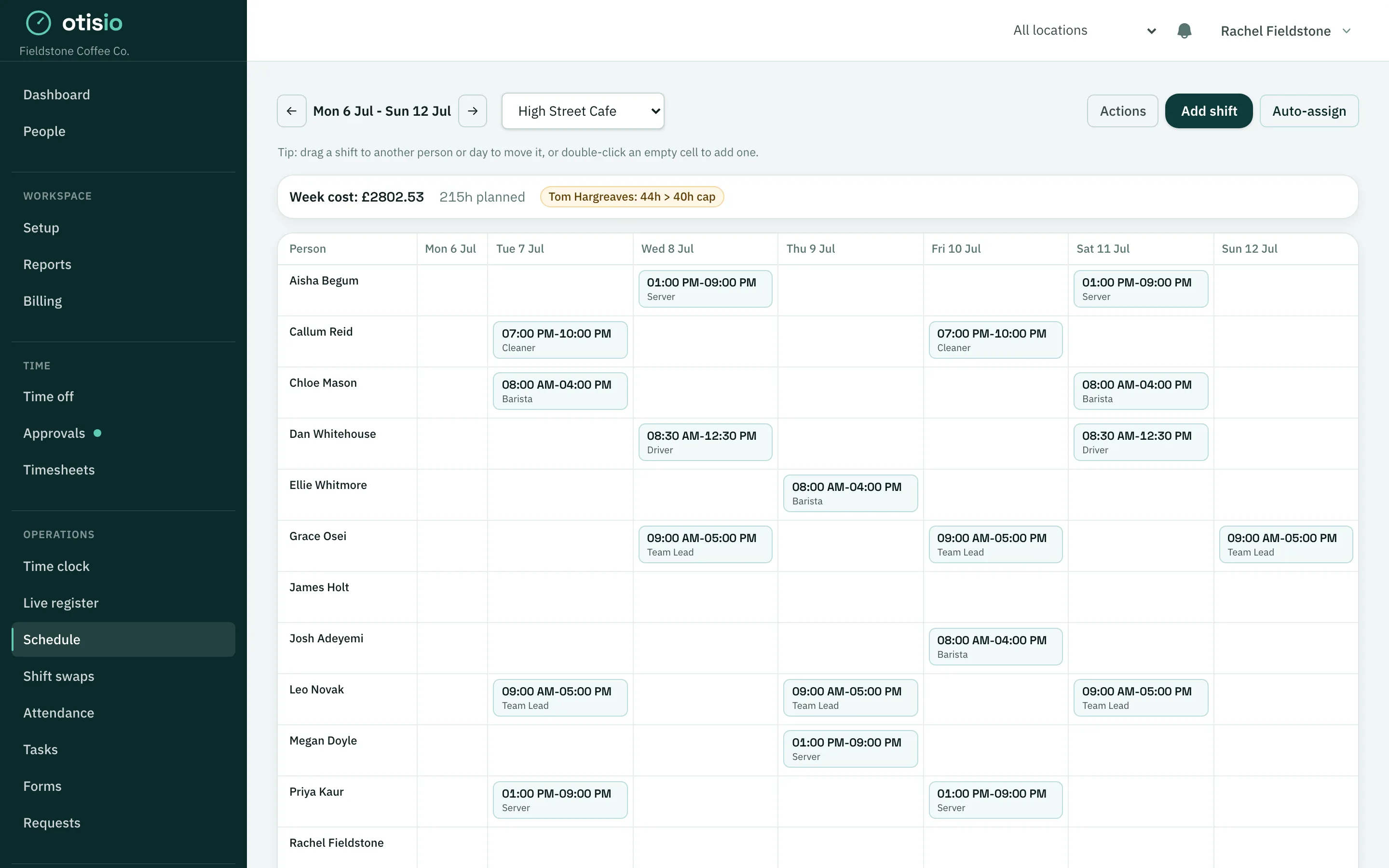
Every assignment is checked as you make it, and a required certificate the person does not hold on that date is one of the checks, alongside approved leave, stated availability, weekly hour caps and rest between shifts. Overlaps and booked leave stop you outright; the rest warn and let you carry on, because a manager covering an emergency at 3am knows something the rota does not.
02
Mandatory training that expires before it bites
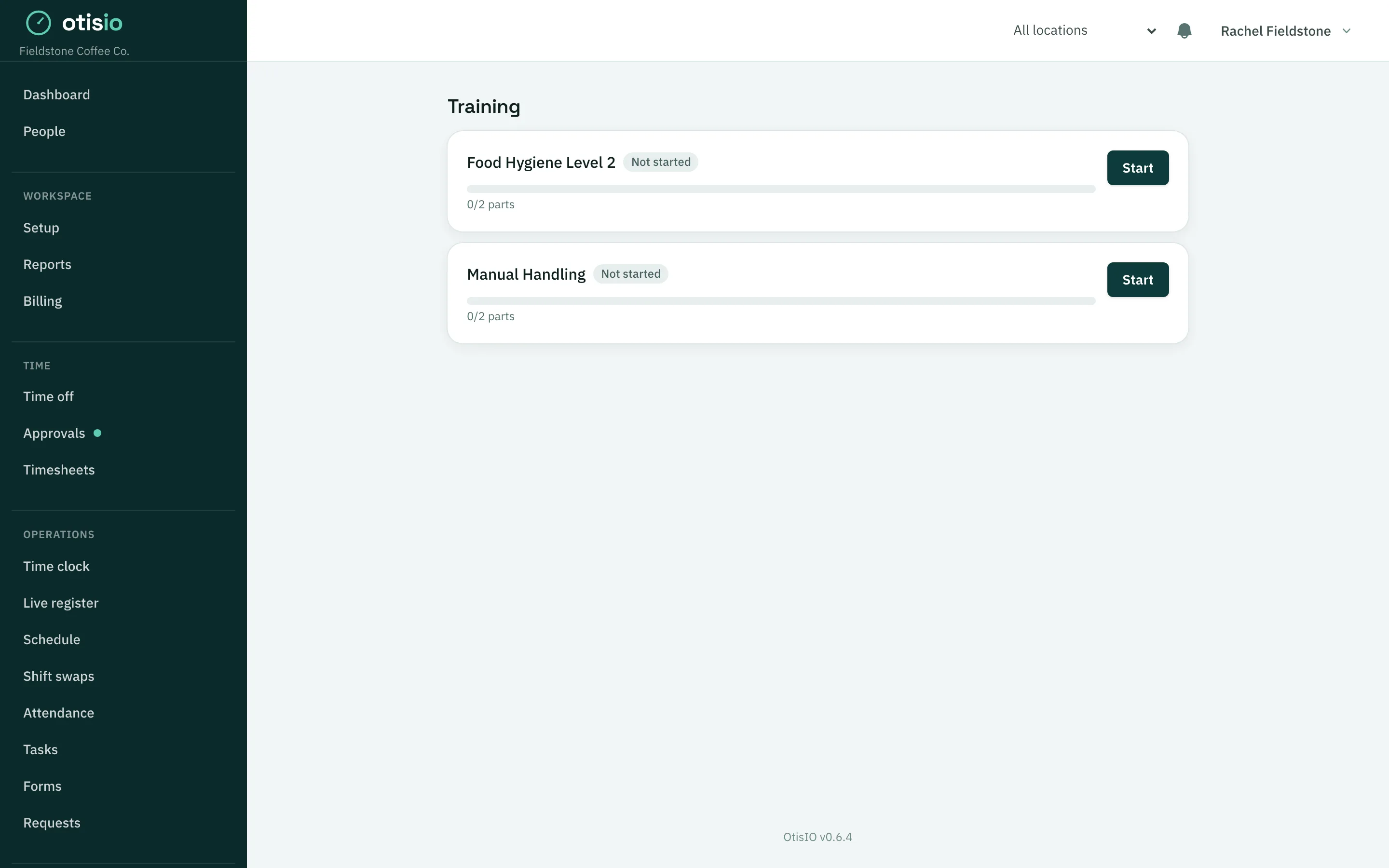
Build courses from written material, files, videos and quizzes, assign them to a whole role or to named people with a due date, and track each person part by part. Certificates carry expiry dates and resurface ahead of time, so a renewal is a diary item rather than a discovery.
03
DBS and right to work, on the profile
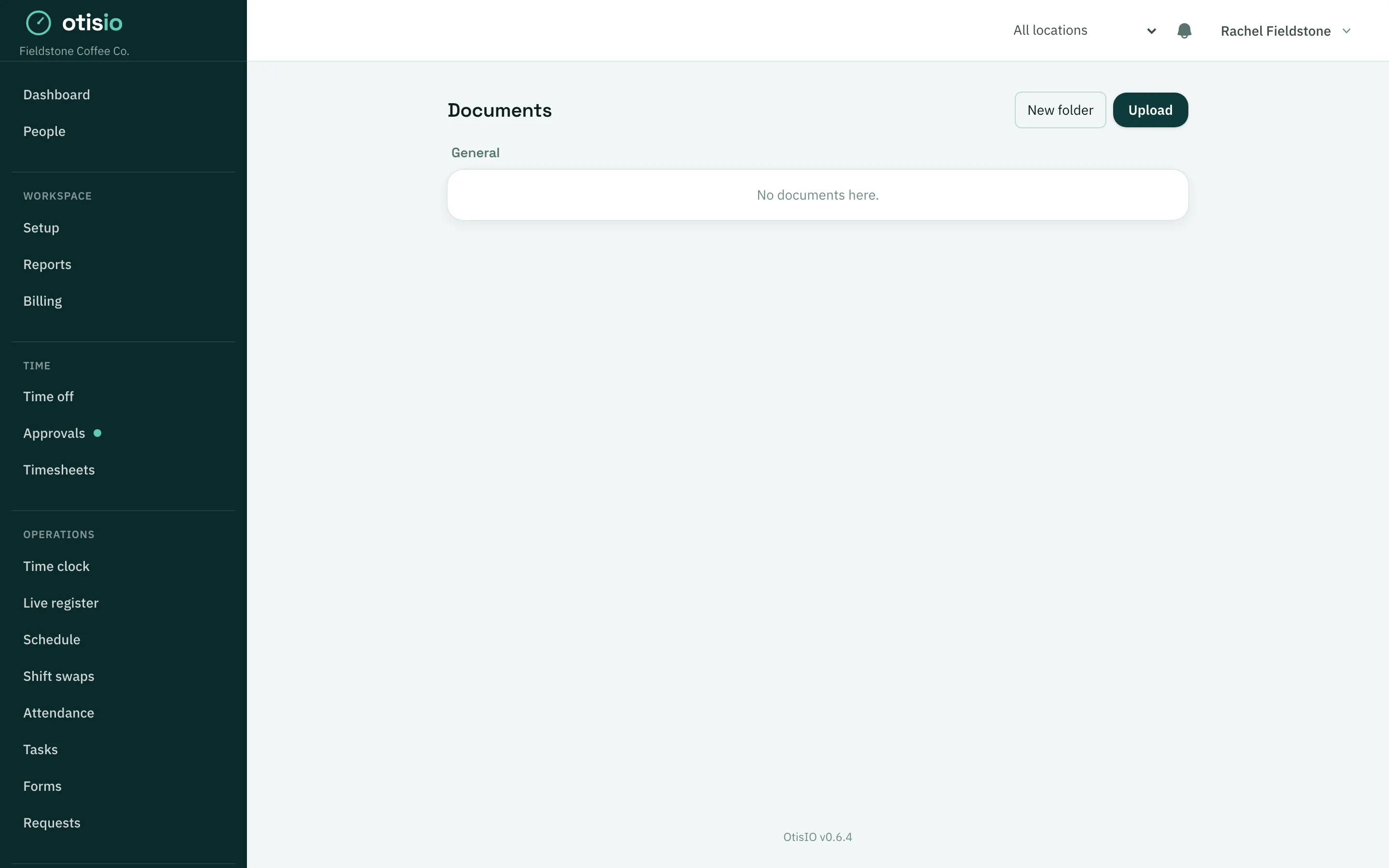
Vetting documents, right-to-work evidence and signed policies live on each person's profile with expiry dates and reminders. Contracts and policies go out for e-signature and every signature is stored with its signer, time and document version, so the file answers the question instead of you.
04
Proof that a visit happened
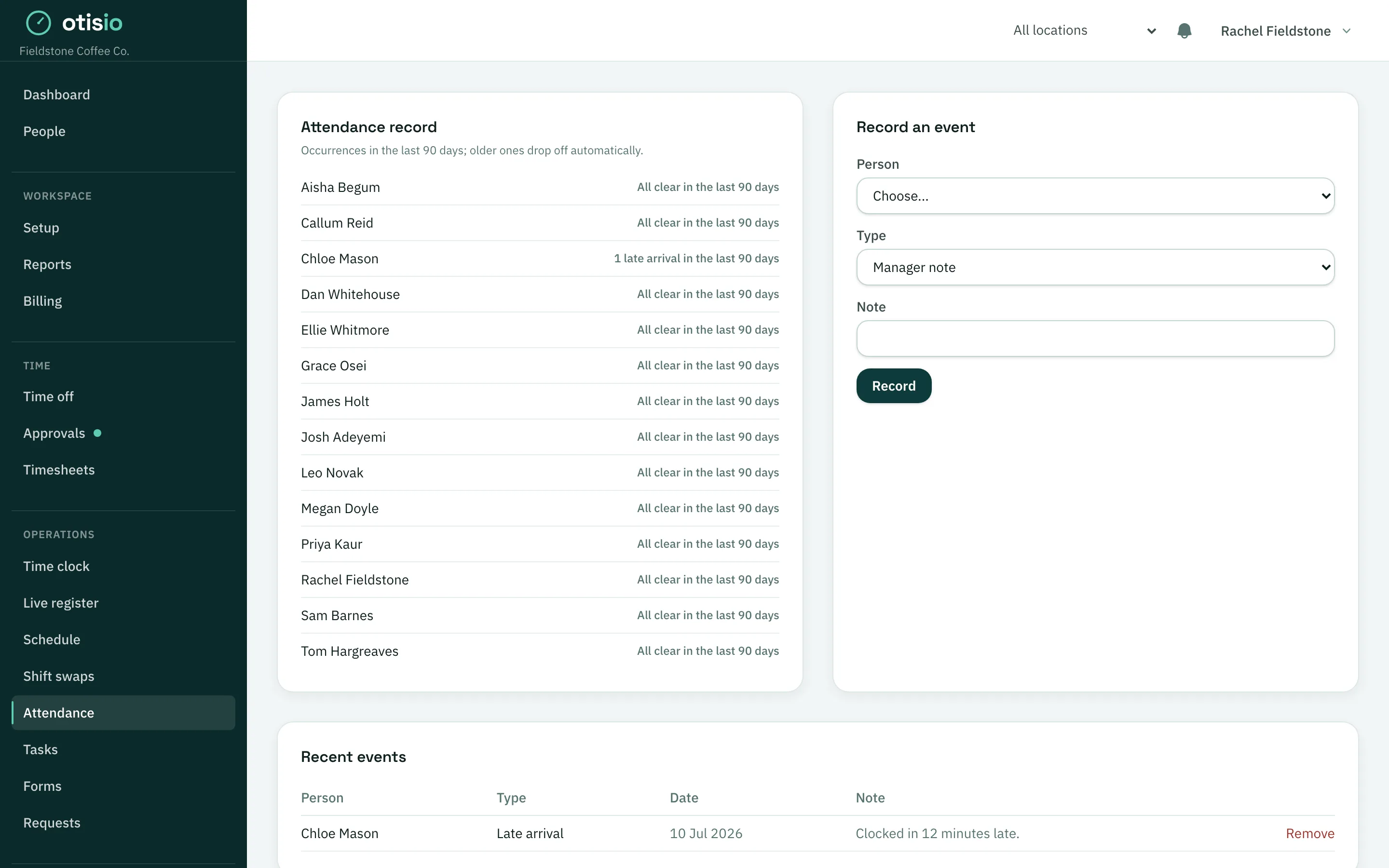
Domiciliary staff clock in from their own phone with a GPS stamp and a geofence check, or tap an NFC tag inside the property. Punches made where there is no signal are held on the phone with the time they were tapped and sync on their own. Location is read at the punch, twice a shift, and never in between.
Built from these features
Every capability above is a page in its own right, with screenshots and the detail.
Questions from healthcare & care teams
Will it stop me rostering someone whose training has lapsed?
It checks and it warns. A required certificate the person does not hold on that date is flagged as you make the assignment, next to the checks for approved leave, availability, weekly hours and rest between shifts. Overlaps and booked leave block outright; a lapsed certificate warns and lets a manager proceed knowingly, because refusing the assignment outright would leave a shift uncovered rather than make anyone safer. If your policy is stricter than that, turn scheduling enforcement up and the same check blocks instead.
How do we track DBS checks and mandatory training?
Both live on the person's profile. Vetting and right-to-work documents carry expiry dates with reminders, and training courses record completion part by part with certificate expiry, so a compliance view shows who is current and who is about to lapse.
Can we prove a domiciliary visit took place?
Yes. Staff clock in from their phone with a GPS stamp measured against a fence around the address, or tap an NFC tag left in the property. A punch made with no signal is kept on the phone with the time it was tapped and syncs later, so a basement flat does not cost anyone their pay or the record.
Does it handle several homes or branches?
Yes. Shifts belong to sites, staff can be assigned across several, and the rota filters per home or shows the whole group at once. Timesheets and training records stay organised around the same sites.
Is this a care management system?
No, and it is worth being plain about it. This runs the workforce: rotas, clocking in, timesheets, leave, training, documents and communication. It does not do care planning, medication records or clinical notes, and it does not connect to NHS or regulator systems. Providers run it alongside their care system rather than instead of it.
See it with your own healthcare & care team
Set up takes minutes: add your people, build a week and publish. Free for 14 days on every paid plan, and free for up to 10 people.
No credit card required.