Absence management
Absence management for the shift nobody covered
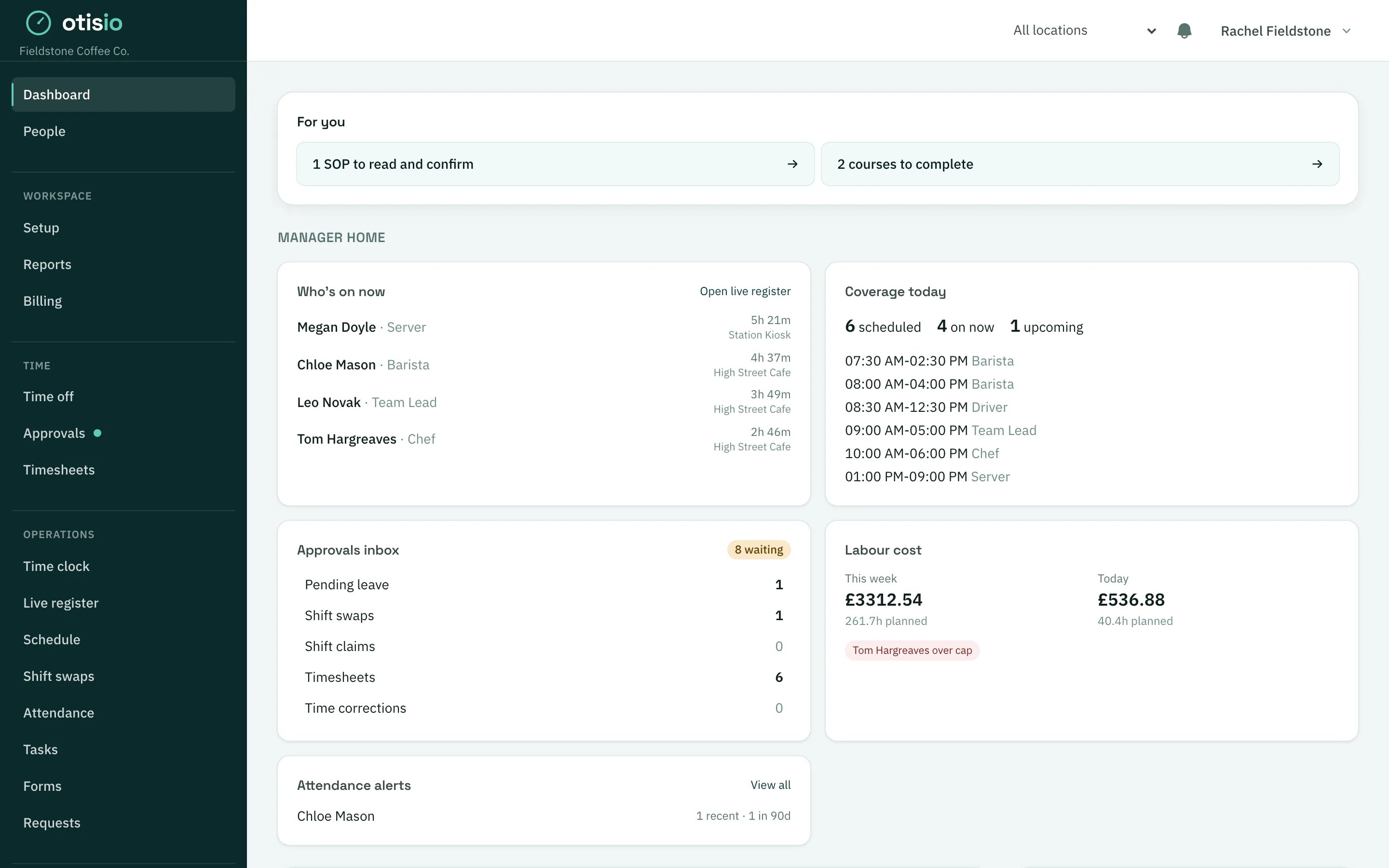
Absence management is how a business records unplanned time off, counts it consistently and acts on a pattern before it becomes an argument. Booked holiday is the easy half. This is the other one: somebody cannot make tonight's shift, somebody does not turn up, somebody is twenty minutes late every Friday. Staff report an absence from their phone, no-shows and late arrivals are detected against the published rota without anyone filing anything, and the count inside a rolling window, ninety days by default, raises a warning before it becomes a conversation nobody prepared for.
No credit card required. Free plan for up to 10 people.
Updated July 2026
01
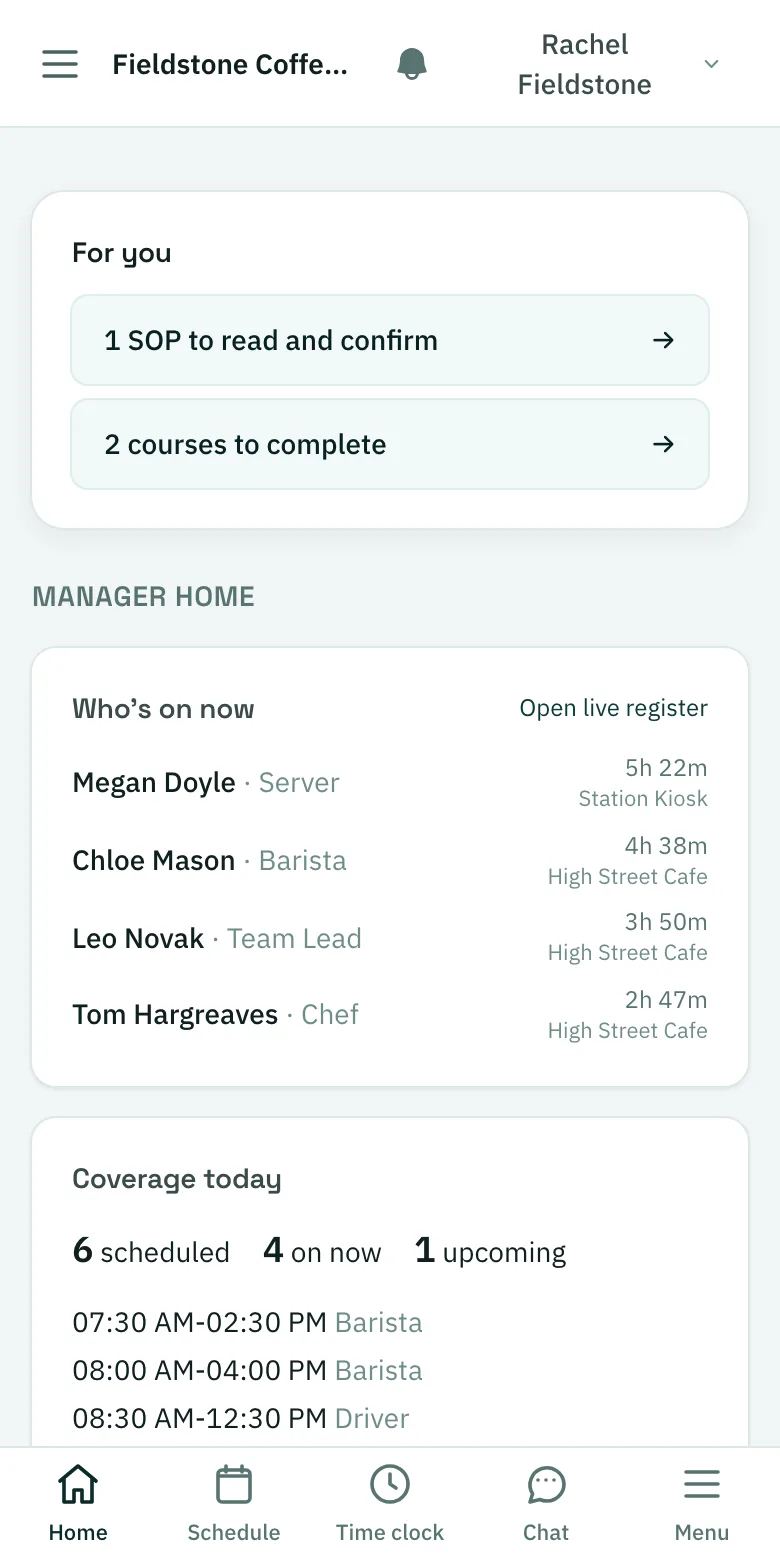
Reporting an absence takes one tap
Somebody who cannot make an upcoming shift reports it from the shift itself, with a reason if they want to give one, and the managers who need to know are notified as it happens. It is one report per person per shift, so a panicked second tap does not become a second absence, and a manager acknowledges it so everyone can see it landed.
02
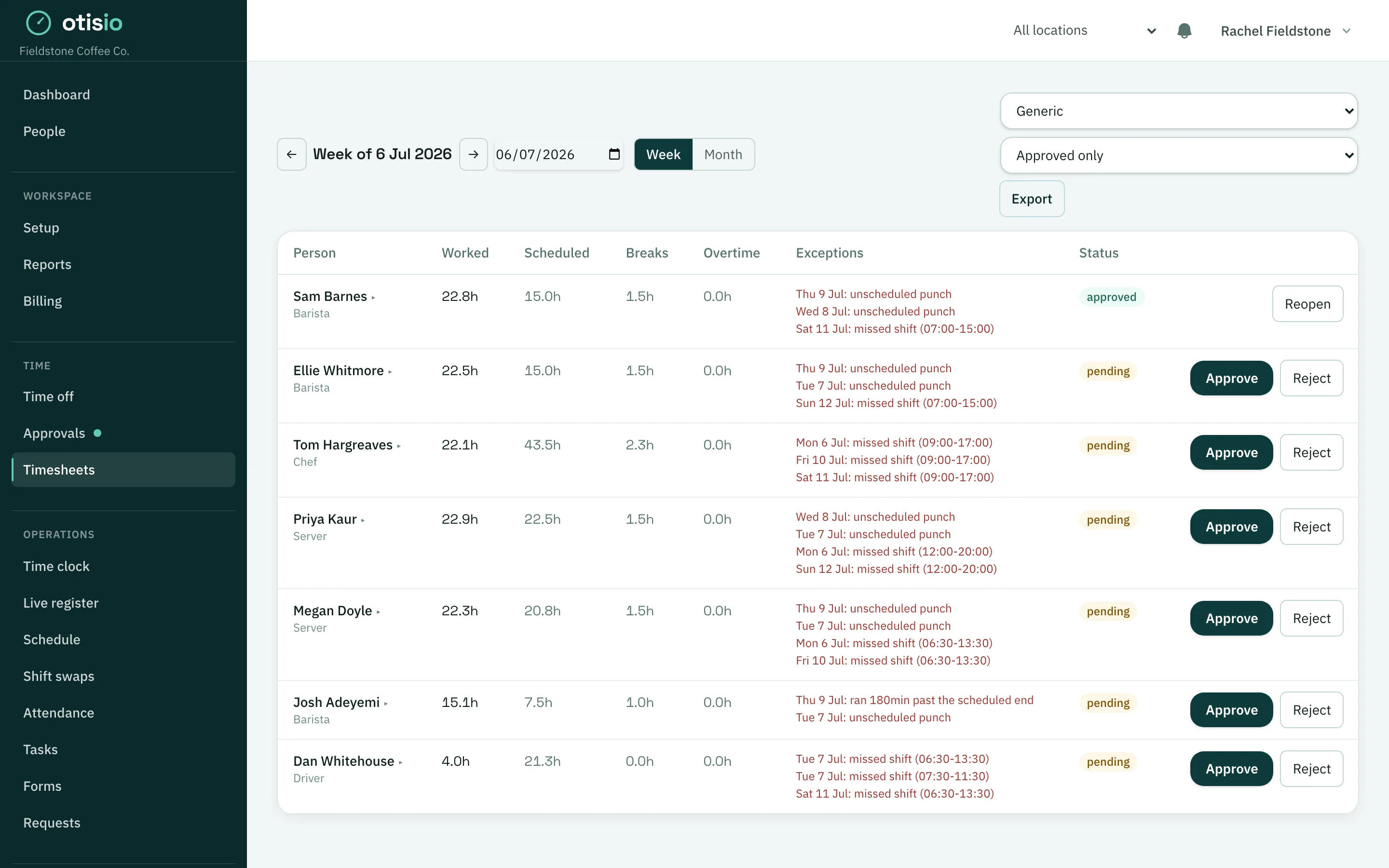
No-shows and late arrivals find themselves
A published shift that ends with nobody clocked in against it is recorded as a no show, and a clock-in past the site's grace period, ten minutes out of the box, is recorded as a late arrival. Neither needs anyone to file anything, and the missed shift also raises a plain-English exception on that week's timesheet. Somebody on approved leave is never scored for a stale shift left behind on the rota, which is exactly the mistake this kind of automation usually makes.
03
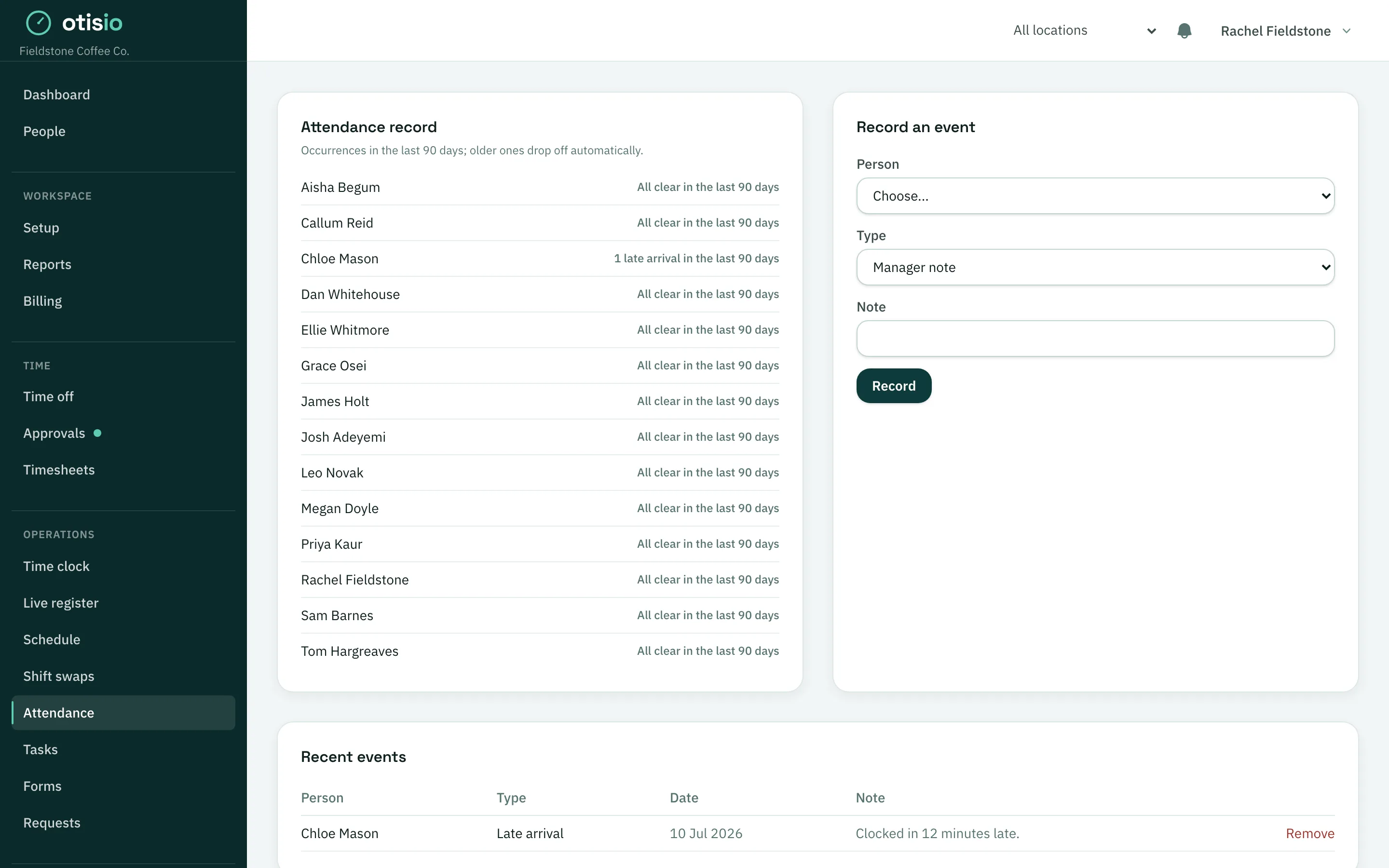
Occurrences, not points
Attendance is counted as the plain things that happened: late arrivals, no shows, left early, reported absences. Anything older than the window stops counting, ninety days by default and yours to change. There is no score out of ten and no invented index, because a number nobody can explain back to the person it describes is not a number worth defending.
04
The absences you do not count, and why
A manager can excuse an occurrence, and that is a discretion: it stopped counting because somebody decided it should. A protected absence is recorded as its own separate thing, for absence that was never yours to count in the first place. Keeping those two apart matters months later, when "a manager waived it" and "it was never ours to count" are very different answers to the same question.
05
A warning that arrives before the meeting
Set the two lines that matter: how many occurrences in the window earn an early warning, and how many reach the final level. Crossing a line notifies the person once, and notifies the managers who genuinely have them in scope, so nobody finds out by opening a page. A record that improves back under the line is a clean record again rather than a mark carried for good. The shipped defaults are three and five inside ninety days, and the thresholds are set once for the whole workspace.
06
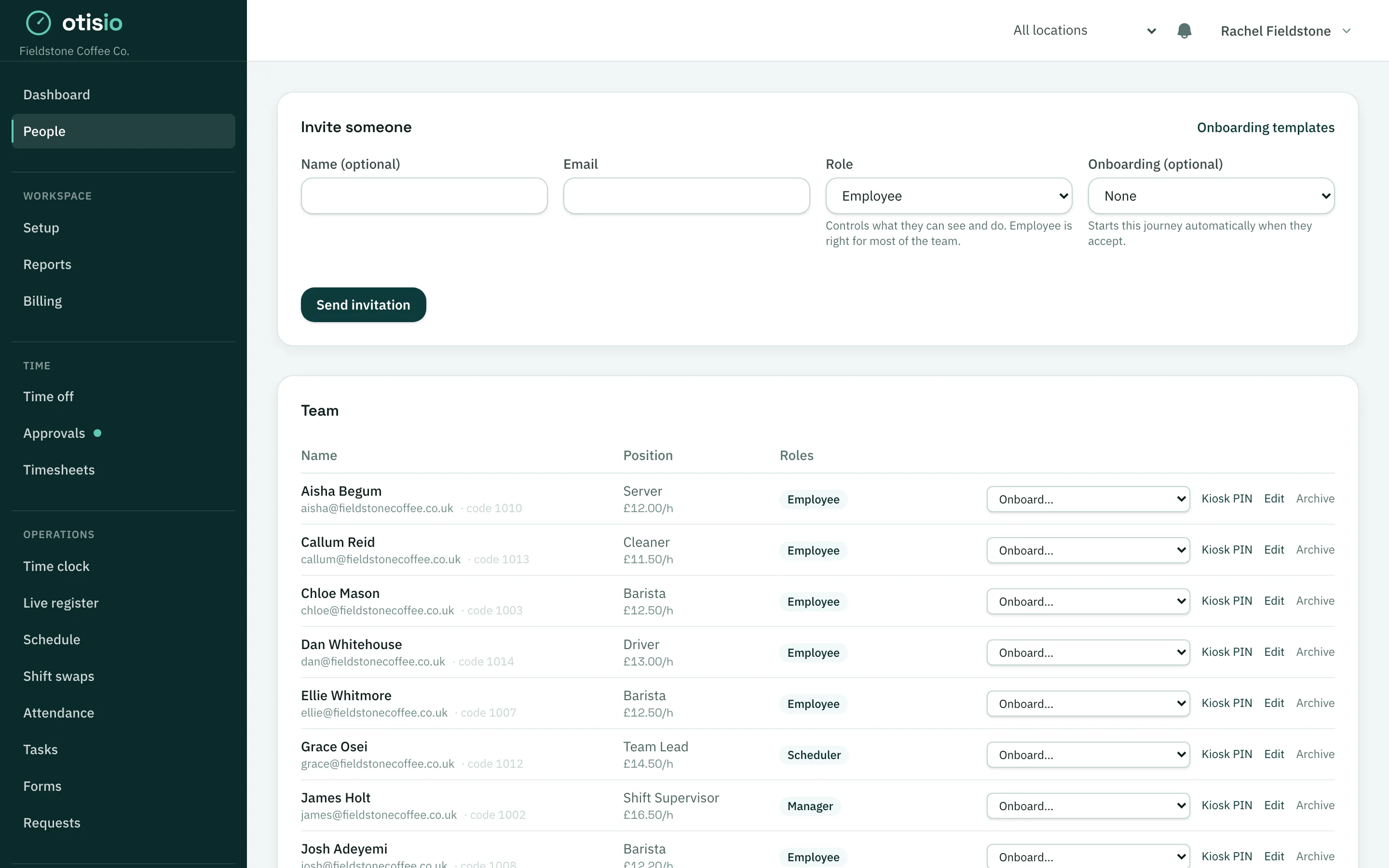
Planned leave is in the same product
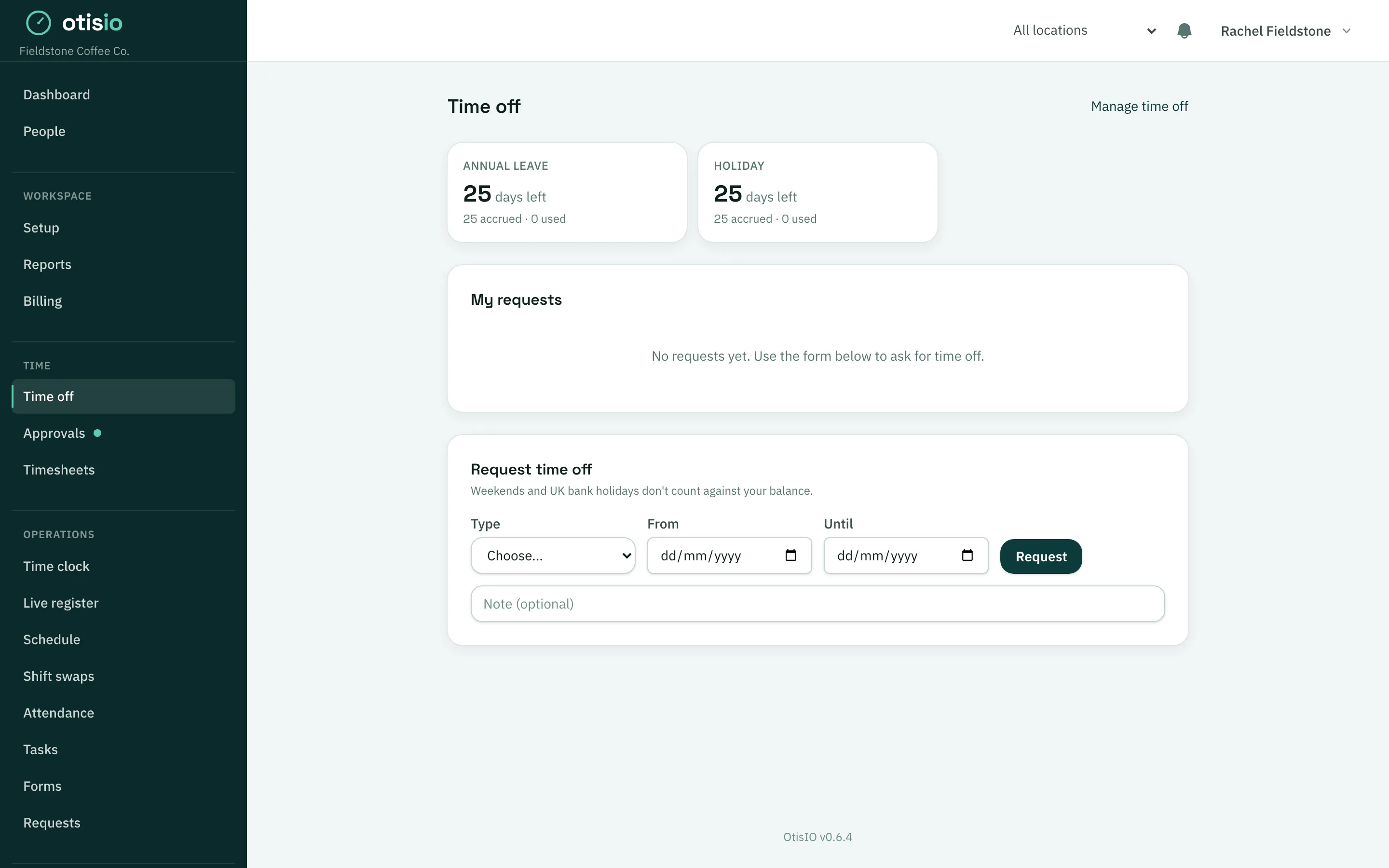
The booked half lives here too: statutory leave types, accrual-based allowances, carry-over, closed periods, a minimum-notice rule and a cap on how many people can be off at once. A month calendar shows managers who is off, and the payroll export carries approved leave days per leave type alongside worked hours, so paid absence reaches payroll with the timesheet rather than in a separate email.
| Booked leave | Unplanned absence | |
|---|---|---|
| Who raises it | The person, in advance | The person on the day, or the rota detects it |
| What happens next | An approver decides | A manager acknowledges the report or reviews the occurrence |
| Effect on the rota | Painted on the grid, and the planner is warned before scheduling over it | Leaves an uncovered shift to fill |
| Counts toward a threshold | No | Yes, unless excused or protected |
| Reaches payroll as | Days per leave type on the export | Hours simply not worked |
Small team? It's free. Properly free.
Up to 10 people at one location, with rotas, a time clock, tasks, chat, announcements and time off included. No time limit, no card, and no nagging to upgrade until you actually grow.
Works together with
Questions about absence management
What is absence management?
Running both halves of people not being at work: the leave booked in advance, and the absence nobody planned for. The second half is the harder one, because it starts with a missed shift and ends with a conversation, and the record in between has to be one somebody can stand behind.
How does someone report an absence?
From the shift itself in the staff app or the web app, with an optional reason. Managers are notified as it happens, and the report is acknowledged so the person knows it was seen.
What counts as an occurrence?
Late arrivals, no shows, leaving early and reported absences. Manager notes, excused absences and protected absences are all recorded, and none of them counts.
Do you calculate a Bradford factor?
No. Attendance is counted as plain occurrences inside a rolling window rather than as a weighted index, and the thresholds are two numbers you set. If your policy is written around a Bradford score, this is not the product for that policy, and it is better to know that now.
Can we set our own thresholds?
Yes. The window, the early-warning count and the final count are all yours. The shipped defaults are ninety days, three occurrences and five, and they are set once for the whole workspace. What an individual site can carry on Pro is its own lateness grace period, so somewhere a late bus is a fact of life is not scoring people for it.
Is sickness handled differently?
Sick leave is one of the statutory leave types in the catalogue, and statutory leave is assigned by a manager rather than self-booked. A sickness absence that should sit outside the trigger system is recorded as a protected absence, which is deliberately a different record from a manager excusing an occurrence.
Can staff attach a fit note to an absence?
Not today. A reported absence carries a free-text reason and nothing else, and there is no upload on the request. If evidence on the record is part of your process, that is worth knowing before you buy rather than after.
Is there an absence report?
There is an occurrence history per person on the attendance screen, and an attendance watchlist in the advanced reports on the Pro plan. There is no absence-rate or days-lost report, and the reports export covers hours and labour cost rather than absence. If a board pack needs an absence percentage, you would be building that yourself.
Which plan includes this?
Time off allowances are on every plan, Free included. Attendance tracking, reported absences and threshold alerts come with the Growth plan, as do accrual-based allowances and automatic bank holidays. Formal HR cases sit on Pro. The pricing page carries the full feature-by-plan table.
See it with your own team
Set up takes minutes: add your people, build a week and publish. Free for 14 days on every paid plan, and free for up to 10 people.
No credit card required.